

ReVitrum
The new Casarialto Atelier project
A new project developed with Rehub transforms borosilicate glass waste into a refined material, where circular innovation meets contemporary design.
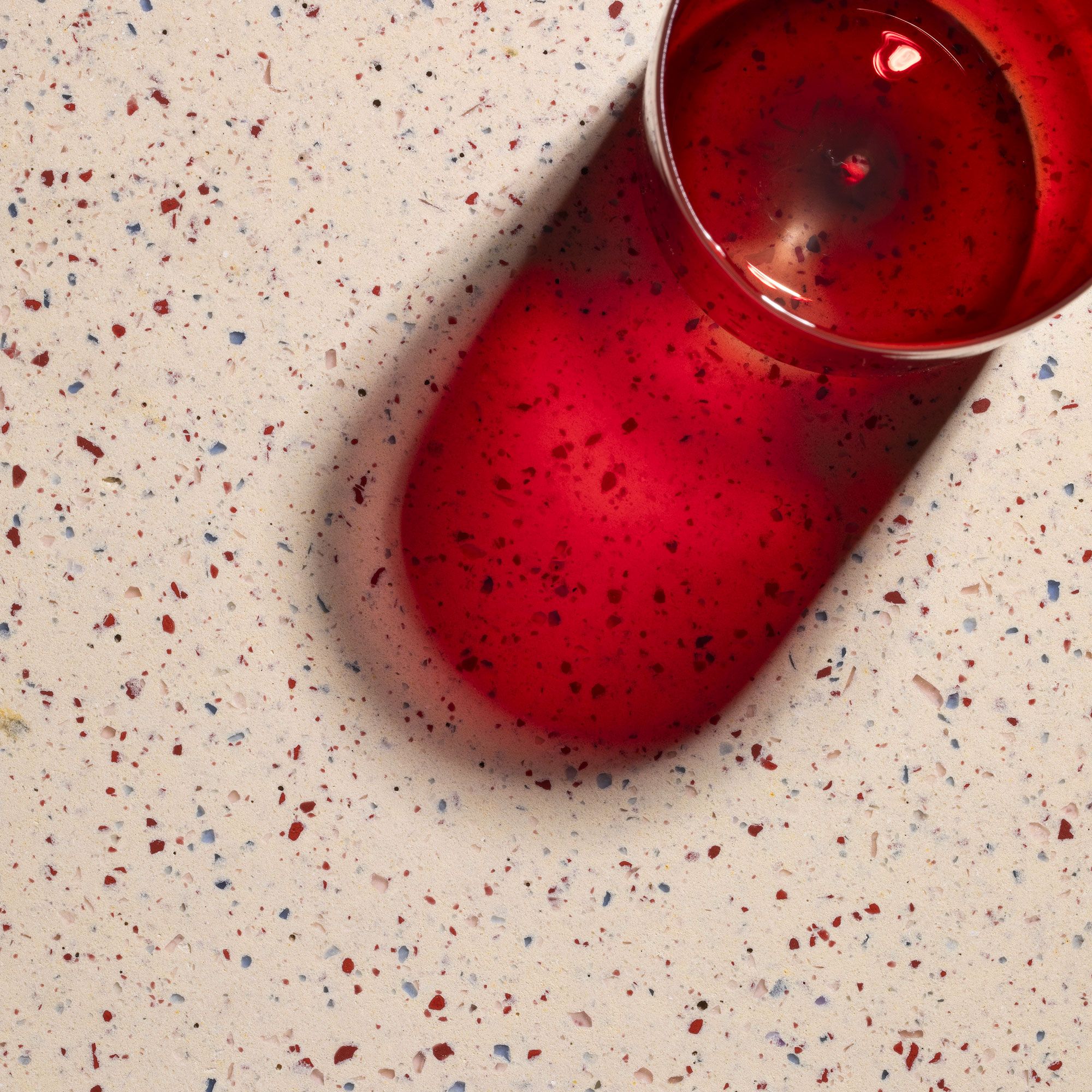
Casarialto Atelier unveils ReVitrum, a new design project developed in colaboration with Rehub, the Murano-based startup committed to rethinking the value of non recyclable glass waste. The initiative is the outcome of a long and shared process of research, combining artisanal expertise, material experimentation and a clear commitment to circular innovation
The Glass cannot be recycled
ReVitrum stems from an urgent and often overlooked reality: not all glass can be recycled. While packaging glass benefits from an established recovery chain, many everyday objects - including drinking glasses, lamps, windows and windshields are typicaly destined for landfil or downcycling. In Murano alone, around half of all glass produced becomes waste, amounting to more than one thousand tons each year. This is especialy significant given that sand, glass's primary component, is the second most exploited natural resource in the world after water, while glass production itself remains highly energy-intensive
Transforming Waste into a New Material
Against this backdrop, the encounter in 2024 between Catherine Urban and Matteo Silverio, founder of Rehub, marked the beginning of a focused research journey into the recovery of borosilicate glass - a material long used by Casarialto.
After an extensive and technicaly demanding development process, the colaboration succeeded in transforming this waste stream into a new material with distinctive aesthetic and functional qualities: durable, food-safe and designed for long-term use.
"Aware that, even in relatively limited quantities, our local artisans - and therefore Casarialto itself - have generated non-recyclable borosilicate glass waste for nearly twenty years, we felt a responsibility to seek a solution," says Catherine Urban, founder and artistic director of Casarialto. "The colaboration with Rehub, and the shared sense of design responsibility behind it, proved essential in overcoming this chalenge through expertise, research and a truly circular approach."
The production process, which takes around 8 days for a single slab, begins with borosilicate glass waste, crushed into a very fine powder. This is then turned into a paste, pressed to form a compact slab, and finaly fired at high temperature (compared with standard borosilicate glass processing) to strengthen and consolidate its structure.
Once recycled, the glass undergoes a profound material transformation, taking on the appearance of stone and revealing a surface visualy reminiscent of Venetian terrazzo.
"We developed a technology capable of giving a second life to a material long considered unrecoverable," says Matteo Silverio, founder of Rehub. "Having a partner such as Casarialto alongside us made it possible to demonstrate how technological innovation and design culture can converge in a genuinely circular model."
An important contribution also came from Siltea, the Padua-based company specialising in nanotechnologies, which carried out the testing required to identify the most suitable surface treatment and ensure compliance with food-contact standards
An iconic and convivial object
After multiple stages of research and development, the project found expression in a universal and highly symbolic object: ReVitrum.
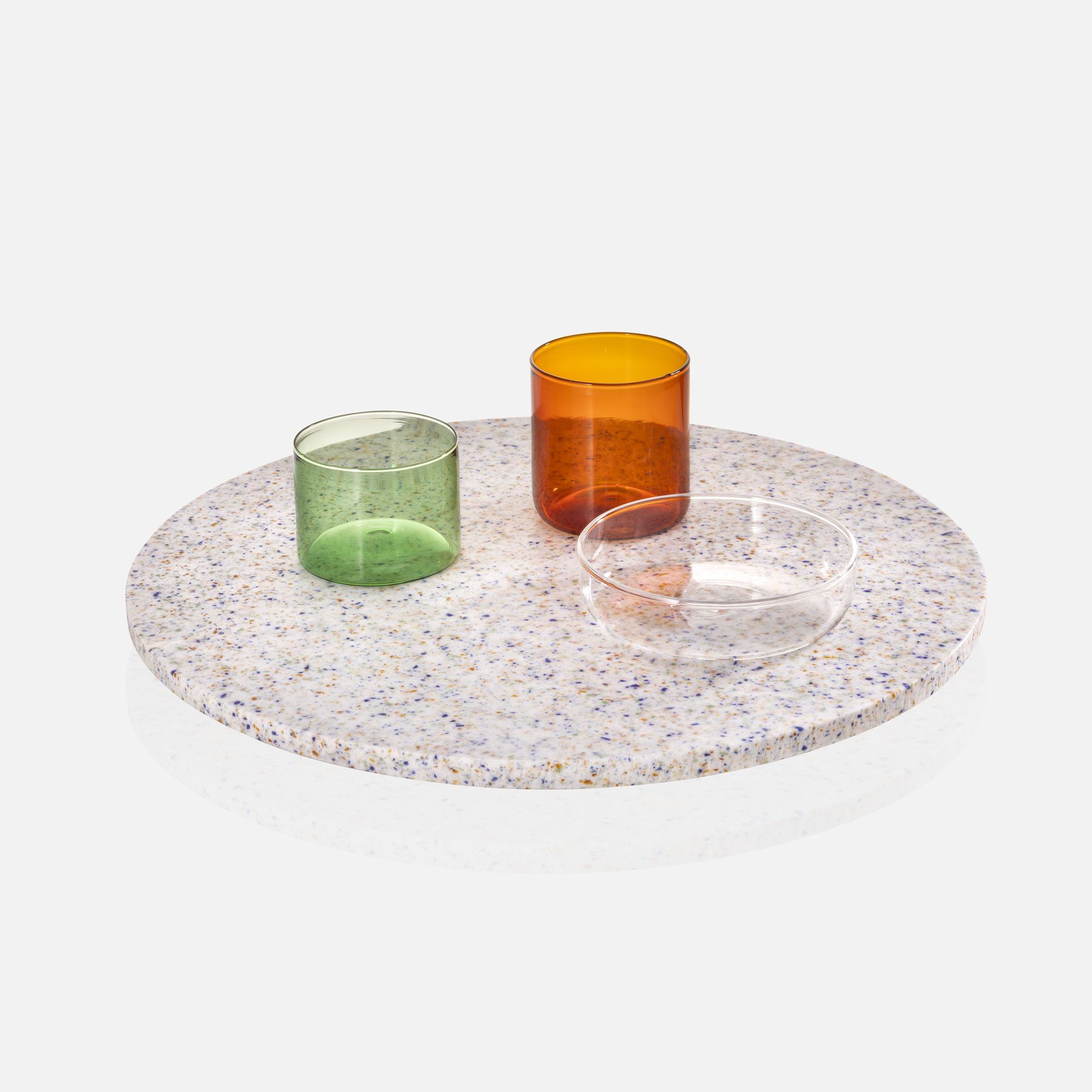
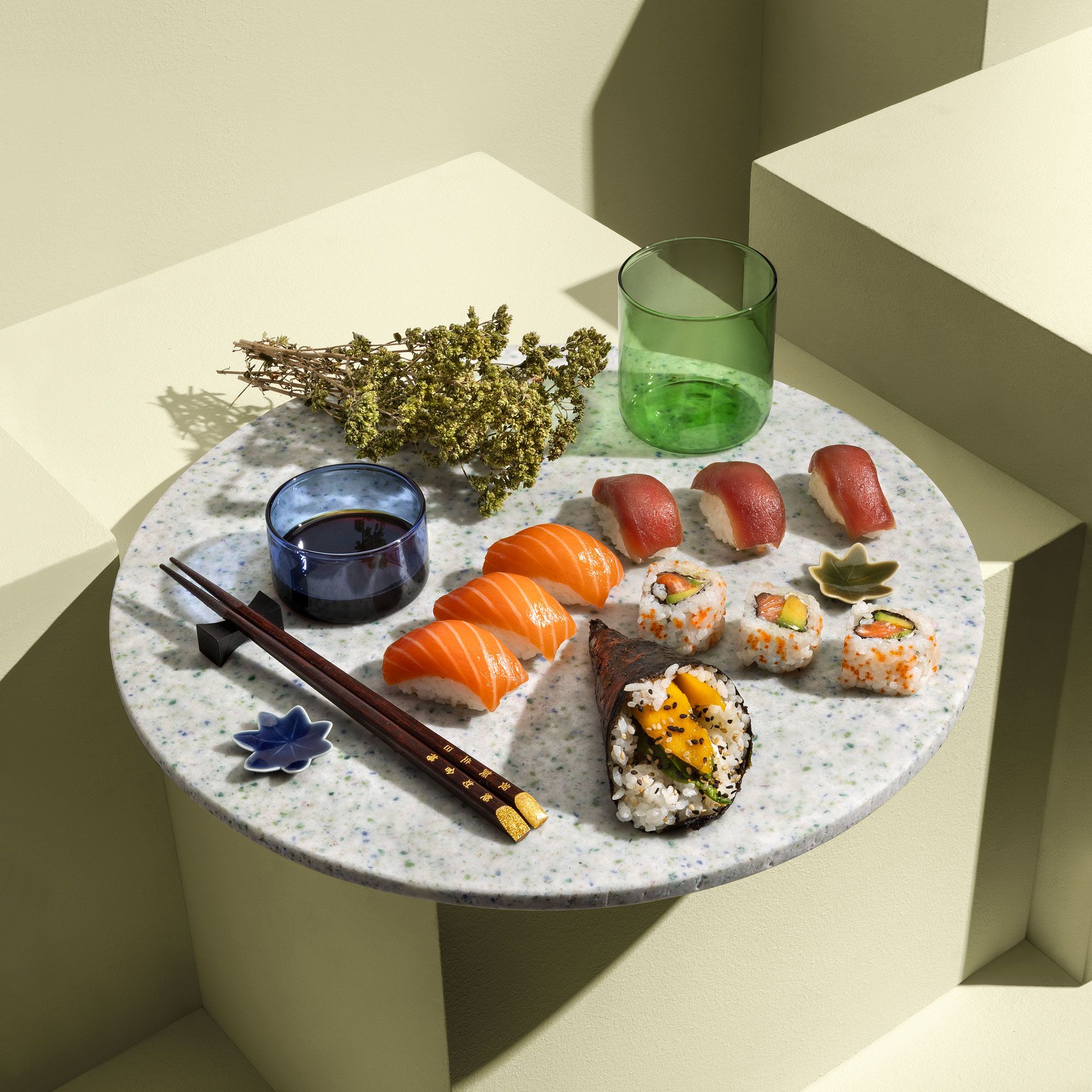
Measuring 40 cm in diameter and 1 cm in thickness, and paired with a lower glass plate that improves grip and handling, the piece combines strong visual presence with everyday functionality. It can serve as a tray, cake stand, serving plate or cutting board, fitting naturally within dining, kitchen and living environments. Its surface is certified for food use, allowing direct contact with food.
Weighing nearly 4 kg, ReVitrum underscores both the density of the material and the sculptural quality of its presence. It is accompanied by three coordinated borosilicate glass bowls, each defined by different heights and diameters, designed to present and serve a variety of foods. The result is a versatile design object that encourages conviviality while turning the everyday act of serving into a more conscious gesture.
Each ReVitrum piece incorporates approximately 4 kg of borosilicate glass waste that would otherwise have been sent to landfil. With ReVitrum, Casarialto reaffirms its commitment to research-led design, demonstrating how sustainability can evolve into an aesthetic language, a form of technological innovation and a broader design culture. Produced in a limited edition of 30 pieces, ReVitrum is available online here
Recommended articles


Sign up for our newsletter to stay up to date
By signing up for the Casarialto newsletter , you will receive information about new products, products and a few style tips.
SHOWROOM Via Terraglio 29, 31100 Treviso +39 0422 174 8892 info@casarialto.it LEGAL OFFICE Via dell’unione 3, 20122 Milano P.I. IT11084350963